
OUR ITINERARIES IN THE MALDIVES
Dive Profile Ranking
 2/5 for the number of wrecks to be visited
 4/5 for close encounters with dolphins
 5/5 for coral gardens and schools of fish
 1/5 for cave and canyon dives
 4/5 for nudis and other macro objects
 5/5 for close encounters with sharks
 5/5 for big fish sightnings
Check dive near Malé Atoll
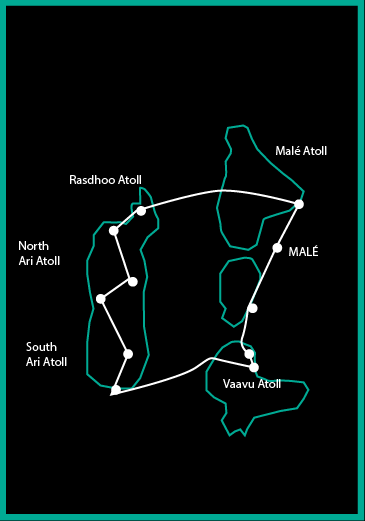
When starting a liveaboard adventure in the Maldives from Malé Atoll, the trip usually begins with a relaxed check dive at one of the atoll’s sheltered reefs or sandy lagoons, allowing divers to test equipment and refresh basic skills before heading to deeper channels and current-rich sites. Commonly chosen spots for these initial dives include Lankan (a renowned manta ray cleaning station near Paradise Island), Fish Tank, Kurumba House Reef, and Maagiri Reef, all of which are close to Malé and offer gentle conditions with abundant marine life. These locations make for an inviting introduction, setting the perfect tone for the vibrant coral gardens, schooling fish, and thrilling pelagic encounters that await throughout the Maldives.
Rasdhoo Atoll
Rasdhoo Atoll, a picturesque and compact atoll in the Maldives, is famed for its thrilling channels, steep outer walls, abundant pelagics, and vibrant coral reefs. The atoll offers over 19 diverse dive sites, from the exhilarating Rasdhoo Channel—an advanced drift dive with regular sightings of grey reef sharks, eagle rays, and schooling fish—to Madivaru Corner, a legendary horseshoe-shaped reef where divers encounter big schools of sharks, barracudas, and rays. Highlights also include Madi Gaa, a manta ray cleaning station; Holhi Faru and Miyaru Faru, which feature stunning walls, caves, and overhangs; Veligandu North, adored for easy drifts among coral gardens and macro surprises; and scenic wreck dives like Kuramathi Queen. Rasdhoo’s clear waters, varied topography, and high chances for shark, manta, and even hammerhead encounters make it a must-visit for both adventurous and beginner divers alike.
North and South Ari Atoll
North and South Ari Atoll, together forming one of the Maldives’ most celebrated diving regions, offer a wealth of famous dive sites known for their abundant marine life, pelagic encounters, and distinctive underwater landscapes. In North Ari Atoll, top sites include Maaya Thila—renowned for grey reef sharks and vibrant night dives, Fish Head (Mushimasmingili Thila)—a protected reef teeming with schooling fish and Napoleon wrasse, and Ukulhas Thila—a long pinnacle drawing rays and sharks. Wreck dives like Fesdu Wreck, and channels such as Veligandu Kandu, further enhance the region’s variety.
South Ari Atoll is especially famous for whale shark sightings at Maamigili and nearby outer reefs, as well as beautiful thilas like Kudarah Thila and Broken Rock, which feature dramatic topography and thriving coral. Dhigurah and Rangali offer manta ray cleaning stations, while Machchafushi Wreck and 5 Rocks are beloved for scenic dives and macro life. Both North and South Ari promise easy drift dives, healthy coral gardens, and an impressive range of large species, making them a must for both adventure seekers and casual divers.
Vaavu Atoll
Vaavu Atoll, also known as Felidhu Atoll, is renowned for its wild, untamed channels and thrilling big-fish action among over twenty spectacular dive sites. The atoll is a paradise for advanced divers, featuring iconic sites like Fotteyo Kandu—often hailed as one of the world’s best channel dives with its vibrant soft corals, dramatic overhangs, and regular encounters with hammerhead, grey reef, and silvertip sharks. Miyaru Kandu (“Shark Channel”) lives up to its name, treating divers to impressive schools of sharks, eagle rays, and exhilarating currents, while Alimathaa Jetty offers unforgettable night dives with tame nurse sharks, stingrays, and abundant reef fish. Other highlights include Fushi Kandu, with its colorful coral blocks and reefs teeming with life, and Kunaavashi Kandu, known for big pelagic sightings. Vaavu’s pristine reefs, frequent shark and manta encounters, and lack of large tourist crowds make it a favorite among liveaboard itineraries and serious underwater adventurers.
Dive Profile Ranking
 1/5 no real mentionable wrecks to visit
 2/5 for close encounters with dolphins
 2/5 for coral gardens and schools of fish
1/5 for cave and canyon dives
2/5 for coral gardens and schools of fish
1/5 for cave and canyon dives
 2/5 for nudis and other macro objects
5/5 for close encounters with sharks
5/5 for big fish sightnings
2/5 for nudis and other macro objects
5/5 for close encounters with sharks
5/5 for big fish sightnings
The Fuvahmulah Diving Experience
Diving in Fuvahmulah is fundamentally different from the rest of the Maldives. Because it is an isolated volcanic island rising straight from the deep ocean floor without a protective lagoon, it acts as a massive magnet for pelagic life. There are no calm, shallow coral gardens here; instead, it offers exhilarating blue-water diving, vertical drop-offs, unpredictable currents, and unparalleled encounters with the ocean's apex predators.
Tiger Zoo (The Harbor Entrance)
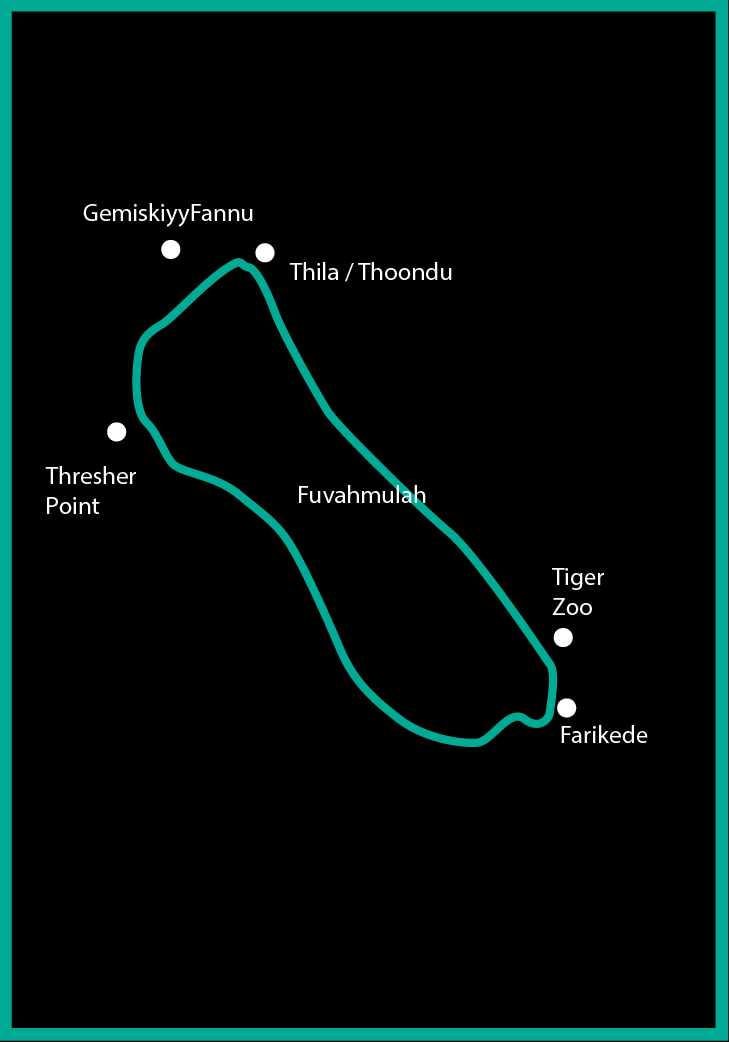
This is the world-famous spot that put Fuvahmulah on the global diving map. Located right at the mouth of the island's harbor, it offers a virtually 100% guaranteed, year-round encounter with resident Tiger Sharks.
This is a highly controlled, shallow dive (usually around 5 to 10 meters) where divers position themselves on a sandy bottom. The tiger sharks—often massive females measuring up to 4 meters—swim calmly and closely around the group. The visibility is usually excellent, making it a dream destination for underwater photographers looking for intense, eye-to-eye encounters with these magnificent predators.
Fuvahmulah Thila (The Plateau)
A deep reef structure located on the northern reef of the island, known as one of the ultimate pelagic viewing points in the Indian Ocean. It is a challenging dive due to strong currents and requires excellent buoyancy control.
Divers typically drop down to a plateau starting around 25 to 30 meters. As you hook into the reef or drift along the edge, the deep blue water comes alive. This is the prime location for schooling Hammerhead Sharks, massive Oceanic Manta Rays ($Manta\ birostris$), Silvertip Sharks, and schools of hundreds of Barracudas and Bigeye Trevallys.
Thresher Point (The Deep Wall)
One of the very few places in the world where divers can reliably encounter the elusive Thresher Shark ($Alopias\ vulpinus$) at recreational depths.
Thresher sharks are deep-water dwellers that usually stay hundreds of meters below. At Thresher Point, they ascend early in the morning to cleaning stations located along the steep drop-offs at around 30 meters. Divers wait patiently in the blue water to witness these sharks with their distinct, whip-like tail fins gliding gracefully through the water column.
Farikede / South Plateau
Located at the southern tip of the island, Farikede is a wild, unpredictable, and raw dive site where ocean currents collide. It is reserved for advanced divers due to the potential for strong washing-machine currents and downcurrents.
This site is the definition of "oceanic wilderness." It serves as a cleaning station and mating ground for various shark species. On a good day, you can see Whale Sharks, schools of Grey Reef Sharks, and Oceanic Whitetip Sharks moving through the deep blue, surrounded by massive schools of pelagic fish like Yellowfin Tuna and Sailfish.
The Reef Wall (Gemiydhi / Mudhimu)
A continuous, dramatic drop-off that runs along the coast of the island. It offers a more classic wall-drift dive compared to the specific plateaus, but with a Fuvahmulah twist.
As you drift effortlessly along the vertical wall, you will see a healthy hard coral top reef. However, your eyes should always be fixed on the blue water. While scanning the wall for Macro life like Nudibranchs or Moray Eels hiding in the crevices, Green and Hawksbill Turtles will regularly swim past, often accompanied by passing Reef Sharks and Eagle Rays riding the currents.
The Fuvahmulah On-Land Experience
The absolute best way to experience Fuvahmulah between dives is by renting a scooter. The island features well-maintained, quiet roads that loop through emerald-green vegetation, local villages, and stunning coastal views. Riding a scooter gives you the freedom to explore at your own pace and discover the island’s hidden gems:
The Twin Freshwater Lakes (Bandaara Kilhi & Dhadimagi Kilhi): Fuvahmulah is incredibly rare for having two large, freshwater lakes in its center. Surrounded by dense wetlands and heavy vegetation, you can walk along wooden boardwalks, spot unique bird species, or even enjoy a therapeutic mud bath in designated areas.
Thoondu Beach: Located at the northern tip of the island, this is a famous and breathtaking beach known for its unique white pebbles and rolling ocean waves. It is a spectacular spot to watch the sunset, feel the island breeze, and see the unique "Bissaavah" (natural pools formed by the shifting sands and waves). Note: Due to strong oceanic currents, swimming here is not recommended, but the scenery is unmatched.
Local Life and Culinary Stops: Riding through the villages allows you to experience authentic Maldivian culture. Stop by a local café (hotaa) to try traditional short eats (hedhikaa), visit the ancient coral-stone mosques, or grab a fresh mango juice from a roadside stall. The islanders are incredibly welcoming and proud to share their piece of paradise.